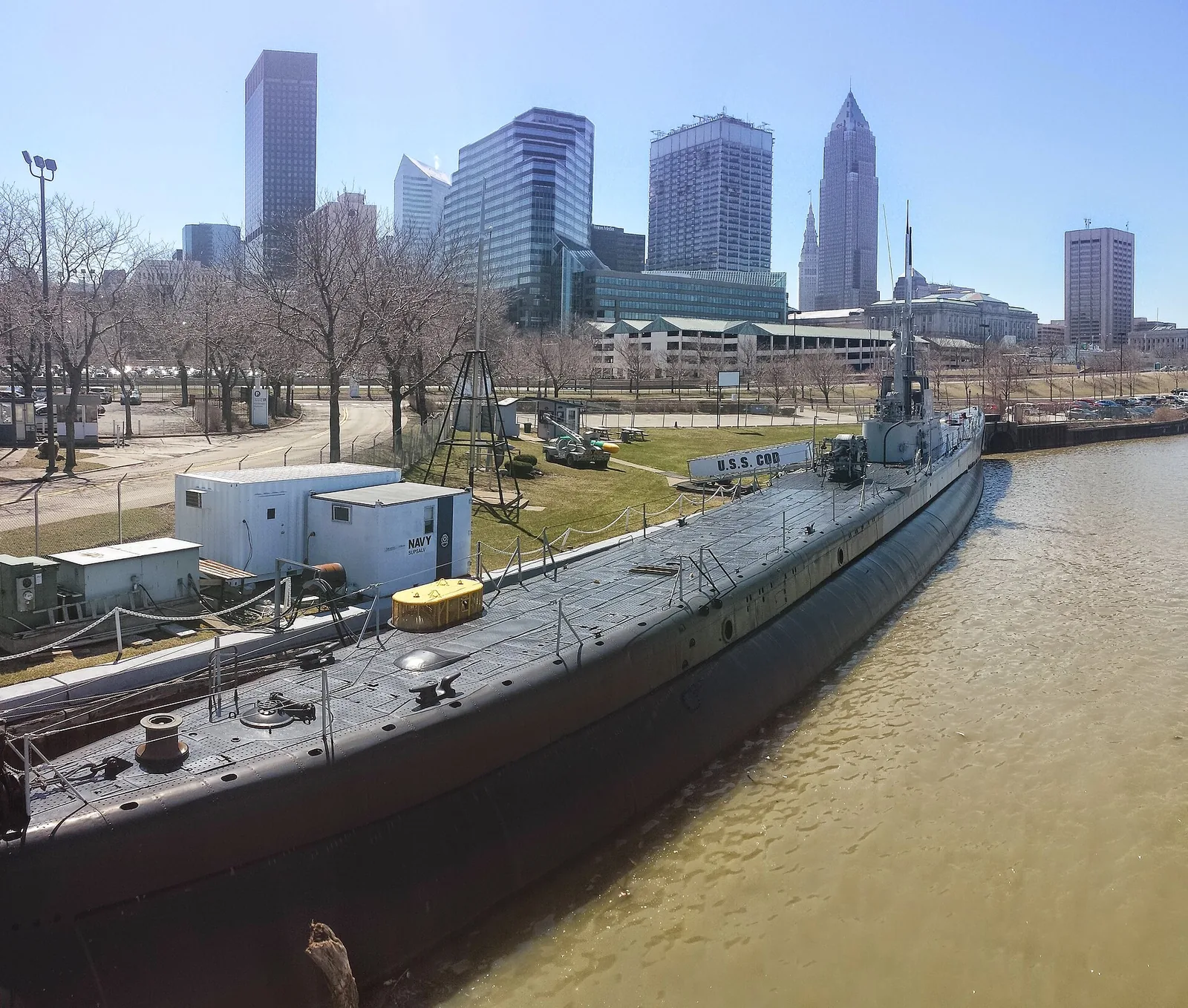
Overview and identity
USS Cod served with United States Navy as a member of Gato class.
USS Cod can be distinguished by the hull or pennant designation SS-224, membership in Gato class, and service with United States Navy. Its history belongs to World War II and to the broader development of submarines. Submarine design is shaped by the tension between underwater endurance, speed, depth, sensors, weapons, habitability, and the need to remain difficult to detect. Changes in propulsion and mission systems can transform the operational meaning of a class even when the basic hull family remains recognizable.
Construction and class context
The sources reviewed do not provide a complete builder and construction chronology for USS Cod. Construction dates help place the ship within its class program and distinguish the original build from later changes in name, classification, armament, or mission.
The Gato class was the first large U.S. Fleet-submarine class built in wartime quantities for long-range Pacific operations. Its range, habitability, ten torpedo tubes, and balanced surface and submerged performance made it the baseline for later Balao and Tench development. The class history explains the common design; this article concentrates on the evidence specific to USS Cod, including construction, assignments, modifications, transfers, and fate where documented.
Service history
Disposition note: preserved museum ship. Names and designations documented during the ship’s career include USS Cod (United States Navy).
As a member of Gato class, USS Cod began with the design, machinery, protection, and mission assumptions shared by the class. Those assumptions included attack-submarine operations, interdiction of maritime trade, and long-range patrol. Ship-specific refits, damage repair, transfers, reclassification, and changing assignments could alter that baseline. Class-level information is therefore used as context, not as proof that every feature remained aboard throughout this ship's career.
Technical configuration
The As completed configuration is presented as a class-level configuration used for context. Its listed characteristics include displacement 1,549 metric ton (surfaced), displacement 2,463 metric ton (submerged), length 95.02 m, beam 8.31 m, and draft 5.2 m. The recorded armament is 10 × 533 mm torpedo tubes; 24 torpedoes; deck gun. For USS Cod, it should be read as shared class context rather than proof of a ship-specific fit on every date.
Later service and disposition
USS Cod survives in preservation. Preserved museum ship.
Preservation gives USS Cod continuing value as a physical source for construction, machinery, weapons arrangement, habitability, and public interpretation. The available preservation information identifies preserved warship.
Historical significance
USS Cod is significant as an individual example of how Gato class moved from a design program into operational service. Its survival allows the public to examine a real member of the class rather than relying only on specifications and photographs.
The evidence currently available for USS Cod is strongest on its documented names and designations, its recorded service, and its final status. The article separates those ship-specific facts from the shared characteristics of Gato class, so readers can see both what is known about this vessel and where the historical record still needs stronger documentation.
Class relationship
This ship is recorded as a member of Gato class. Shared design history belongs on the class page; this page concentrates on the individual hull where evidence is available.
Sources and further reading
- List of Gato-class submarines ↗Wikipedia · accessed 2026-09-18