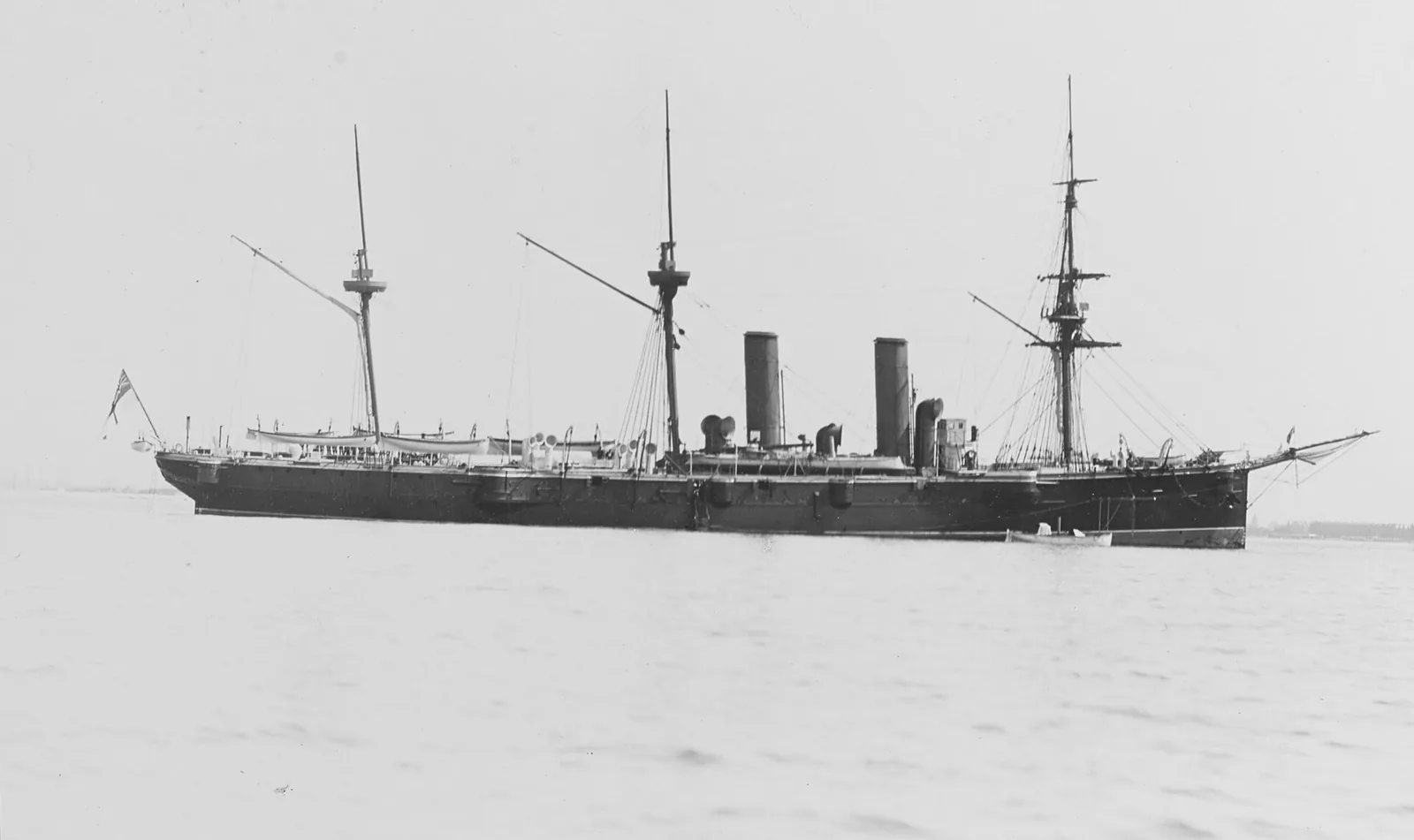
Overview and historical setting
The four Leander-class cruisers were second-class Royal Navy cruisers built during the transition toward protected cruiser design.
The class belongs to the history of cruisers and served during late nineteenth century. Cruisers were expected to combine endurance and independent action with fleet duties such as scouting, screening, command, trade protection, and surface combat. That broad mission set produced considerable variation in armament, protection, speed, sensors, and size from one generation to another. For Leander class, the documented mission set included scouting, protection of maritime trade, and overseas service.
Development and design
Admiralty Intelligence records group Leander, Arethusa, Amphion and Phaeton together as partially protected second-class cruisers. The program chronology records design work beginning in 1880, construction beginning in 1880, and the documented construction period ending in 1885. Program totals list 4 planned, 4 ordered, 4 laid down, 4 completed, and 0 cancelled. These dates and totals distinguish the design program from the number of ships that were actually completed and entered service.
The design evidence for Leander class identifies steel hull, steam, and protected deck and scouting, protection of maritime trade, and overseas service. These features connect the class's technical arrangement to the work it was expected to perform for Royal Navy. Later refits, revised sensors, new weapons, and changes in doctrine could alter the practical capabilities of individual members without changing their class identity.
Technical character
The Leander class baseline configuration is presented as the as-completed configuration. The recorded armament is Mixed cruiser battery; the sources reviewed do not provide a detailed as-built fit. The figures describe one documented state and may not apply unchanged throughout the subject's service life.
Technical data for Leander class is most useful when tied to a date and mission. Displacement changed with fuel, ammunition, electronics, weapons, and later modifications; speed and range depended on operating conditions; and sensors or armament could vary substantially between members and periods of service.
Ships of the class
The documented roster contains 4 members. These include HMS Leander, HMS Phaeton, HMS Amphion, and HMS Arethusa. The available sources support this as the complete class roster.
Individual ship histories are needed to show how a common design diverged through construction differences, refits, damage, transfers, new assignments, and final disposition. For a ship-level view of the class in service, see HMS Leander, whose profile follows the evidence available for one member of Leander class.
Service history
The ships served in fleet and overseas stations where speed, range and general-purpose armament were more important than battleship-scale armor. The shared design created a common starting point, while individual ships could accumulate different deployments, combat damage, modernization work, transfers, and end states.
Historical significance
The class represents the growing specialization of cruiser design in the 1880s. Its significance is best assessed through the relationship between mission, technical choices, production scale, and the service experience of its members.
For Leander class, the most useful points of comparison are the requirement for scouting, protection of maritime trade, and overseas service, the use of steel hull, steam, and protected deck, and a program recorded as 4 planned, 4 ordered, 4 laid down, 4 completed, and 0 cancelled. Those factors help explain what the class offered Royal Navy, how it differed from predecessors or contemporaries, and why ships built to the same design could still have different careers.
Understanding Leander class across time requires separating the design as approved, the configuration in which individual ships entered service, and later changes made after operational experience. For Royal Navy, that distinction matters because a refit could alter weapons, sensors, aviation facilities, command arrangements, or mission without creating a new class. The class history defines the common baseline; dated ship histories show how each member changed within it.
Ships in this class
Showing 4 recorded class members.
Sources and further reading
- British War Vessels Photograph Book — Admiralty Intelligence Department, March 1892 ↗Royal Museums Greenwich · accessed 2026-09-18
- Leander (1882) ↗Royal Museums Greenwich · accessed 2026-09-18